
Written by Jeff Chandler, South Carolina Attorney
Practicing in South Carolina since 1999
Last reviewed: August 12, 2026
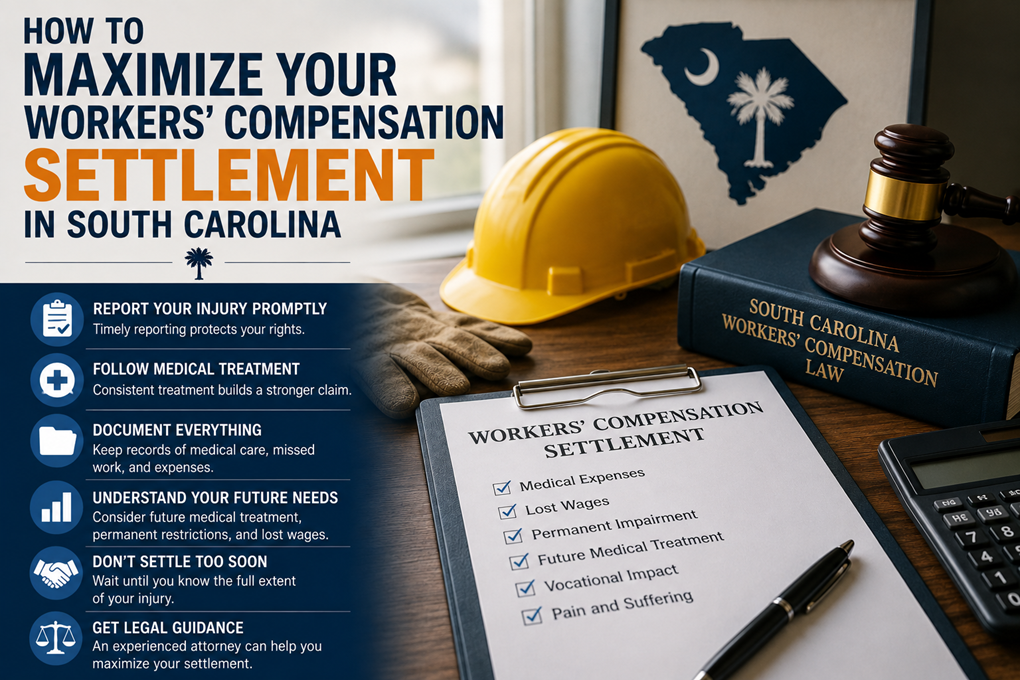
1. Report Your Workplace Injury Promptly
Building a strong claim starts immediately after the accident.
South Carolina law generally requires an employee to notify the employer of an accident within 90 days, although notice should be given immediately or as soon as reasonably practical.
Waiting can lead to disputes about when, where, or how the injury happened.
Report the injury in writing when possible and keep a copy. Include the date, location, circumstances of the accident, and all injured body parts.
Chandler Law Firm’s guide to filing a South Carolina workers’ compensation claim explains the reporting and filing process in greater detail.
2. Follow Your Authorized Medical Treatment
Your medical records can significantly affect the value of your claim. Attend appointments, follow your physician’s restrictions, participate in prescribed therapy, and discuss continuing symptoms with your medical providers.
Avoid minimizing your symptoms, but do not exaggerate them either. Consistency matters.
Unexplained gaps in treatment or missed appointments may give an insurance carrier grounds to question the severity of your condition.
South Carolina law generally requires an employer to provide reasonable and necessary medical treatment for a compensable workplace injury. You can learn more about medical care, wage replacement, and other benefits in Chandler Law Firm’s guide to South Carolina workers’ compensation benefits.
3. Don’t Settle Before Understanding Your Long-Term Condition
One of the biggest mistakes an injured employee can make is rushing into a settlement before the medical picture becomes clear.
Your authorized physician may eventually determine that you have reached maximum medical improvement (MMI). MMI generally means your condition has stabilized and additional treatment is not expected to substantially improve it.
At that point, your doctor may assign an impairment rating and permanent restrictions.
Before discussing a final resolution, you should understand questions such as:
Will You Need Future Medical Treatment?
Future treatment can be important when evaluating a settlement. Depending on your injury, you may need medications, injections, physical therapy, diagnostic testing, medical equipment, or even surgery.
Can You Return to Your Previous Job?
Permanent restrictions may affect your ability to return to the work you performed before the accident. That can be especially important when an injury affects your earning capacity.
Do You Have a Permanent Impairment?
South Carolina law provides compensation for certain permanent disabilities and losses involving specific body parts. The applicable benefits depend on the nature and extent of the injury.
4. Document the Full Impact of Your Injury
To maximize your workers’ compensation settlement in South Carolina, good documentation matters.
Keep organized records of your medical appointments, work restrictions, missed work, communications with the insurance carrier, mileage for qualifying medical travel, and other claim-related information.
You should also maintain copies of your wage records. Workers’ compensation benefits can depend on your average weekly wage, so inaccurate or incomplete wage information could affect the calculation of benefits.
For additional practical steps, review Chandler Law Firm’s South Carolina Workers’ Comp Guide.
5. Understand What a Settlement Will Close
Not all workers’ compensation resolutions work the same way.
The South Carolina Workers’ Compensation Commission lists Form 16A for agreements involving permanent disability or disfigurement compensation and Form 24 for applications involving lump-sum awards.
Under South Carolina Code § 42-9-301, certain future weekly payments may be converted into a lump sum under specified circumstances and with Commission involvement.
The important point is that you should understand exactly what a proposed agreement resolves before signing it.
Ask whether the agreement affects future medical treatment, additional disability benefits, or other rights. A settlement that looks attractive today could be less favorable if you later discover that you need expensive treatment that is no longer covered.
6. Don’t Assume the Insurance Company’s First Offer Reflects the Claim’s Full Value
The insurance company evaluates claims from its own perspective. Its initial settlement offer does not necessarily represent everything available under South Carolina law.
Before responding, consider the medical evidence, impairment rating, work restrictions, wage information, future treatment, and any disputed issues.
You should also understand that there is no legitimate formula that can guarantee a particular settlement amount. Two employees with apparently similar injuries may receive different outcomes because their medical histories, wages, restrictions, treatment needs, and ability to return to work differ.
7. Be Careful About Social Media
A photograph or casual comment can be taken out of context.
Insurance companies may investigate claims, and public social media activity can create unnecessary disputes about your physical abilities or recovery.
If you claim that a back injury severely limits your activities but publicly post photographs that appear inconsistent with those restrictions, you may have to explain the discrepancy.
The safest approach is to keep information about your injury and workers’ compensation claim private while the case is pending.
8. Consider Whether Someone Other Than Your Employer Caused the Injury
Some workplace accidents involve a third party.
For example, you might be injured by a negligent driver while working, defective equipment, or the actions of a contractor from another company. Depending on the circumstances, you could have a separate third-party personal injury claim in addition to workers’ compensation benefits.
These claims are governed by different rules and may involve damages that workers’ compensation does not cover. Identifying potential third-party liability early can therefore be important to protecting your overall legal rights.
9. Get Legal Guidance Before Signing a Settlement
Workers’ compensation settlements can involve complicated questions about medical evidence, permanent disability, future care, wage calculations, and the rights being released.
Once a claim has been resolved, changing the agreement later may be difficult or impossible.
Speaking with a South Carolina workers’ compensation attorney before accepting an offer can help you understand what the insurance company is proposing and whether important issues remain unresolved.
Talk to Chandler Law Firm About Your Workers’ Compensation Settlement
There is no single strategy that will maximize a worker’s compensation settlement in South Carolina in every case. The strongest approach is to protect your claim from the beginning, follow your treatment plan, document your losses, understand your future medical needs, and carefully evaluate any settlement before agreeing to it.
Chandler Law Firm represents injured workers in Myrtle Beach, Charleston, Horry County, and other communities throughout South Carolina.
If you have been offered a settlement—or want to understand what your workers’ compensation claim may involve—contact Chandler Law Firm to discuss your situation.
Call 843-448-4357 to schedule a consultation.
About the Author
 Jeff Chandler has practiced law in South Carolina since 1999. His practice includes workers’ compensation, personal injury, and medical malpractice matters. He represents injured individuals throughout South Carolina from Chandler Law Firm's Myrtle Beach and Charleston offices.
South Carolina Bar Admission: 1999
View Jeff Chandler's Attorney Profile →
Important Legal Information
This page provides general information about South Carolina law and is not intended as legal advice. Reading this page or contacting Chandler Law Firm does not by itself create an attorney-client relationship. The application of the law depends on the facts and circumstances of each case.